Sermorelin can cause adverse reactions, and reliable frequency estimates for current compounded preparations are limited. Discuss new symptoms with your prescriber and seek urgent help for signs of a serious allergic reaction.
The regulatory history of Geref (sermorelin) does not make current compounded adult preparations approved products. FDA does not review compounded medicines for safety, effectiveness or quality before marketing. Source: FDA: Geref regulatory record Source: FDA: risks of compounded medicines
First, what sermorelin is
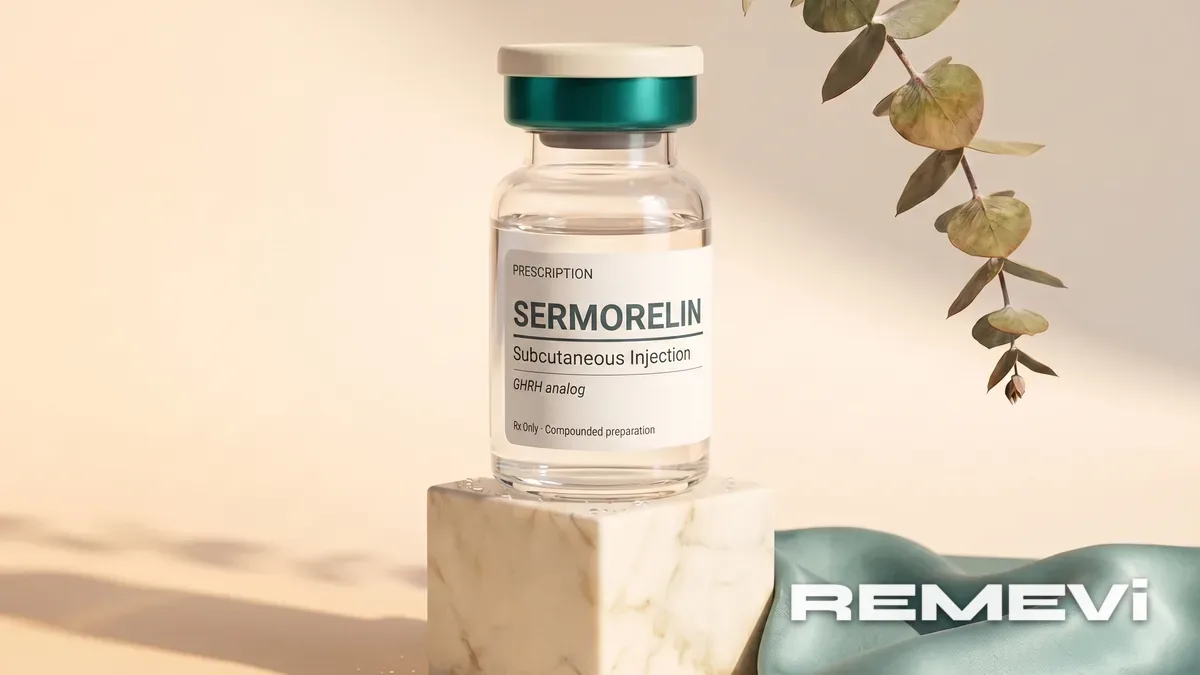
Sermorelin is a growth-hormone-releasing-hormone (GHRH) analog — a peptide that signals the body to release its own growth hormone. It is prescribed as a compounded medication by a licensed US provider after an individual evaluation, and it is not an FDA-approved finished drug product. You can read the full overview on the sermorelin treatment page.
Commonly reported side effects
The effects patients and clinicians most commonly report are:
- Injection-site reactions — temporary redness, swelling, or irritation where the injection is given
- Flushing — a brief warm or red sensation
- Headache
These are generally mild and local. As with any prescription medication, other effects are possible, and individual experiences differ.
Why a list is not enough
A bulleted list cannot tell you your risk. The likelihood and significance of any side effect depend on your health history, current medications, age, and other factors a provider weighs during evaluation. That is the core reason sermorelin is:
- Prescription-only — a licensed provider decides whether it is appropriate
- Individually screened — providers check for contraindications and may decline to prescribe
- Monitored — you have a care team to contact and a provider who can adjust or stop treatment
What to watch for and what to do
Pay attention to anything that feels persistent, worsening, or unusual, and contact your care team if it does. A serious program makes that easy — you are not on your own with a vial. For any severe or urgent symptom, seek emergency care immediately.
The regulatory context matters
Because compounded sermorelin is not an FDA-approved finished drug product and has not been studied as a finished product, its risk information comes from clinical understanding of the molecule and from provider oversight — another reason the conversation belongs with a licensed clinician.
Have questions about whether sermorelin is right for you? Start a clinical evaluation with REMEVi — a licensed US provider reviews your history, explains the risks, and decides whether to prescribe. A four-week subscription with bilingual care.
Related reading: is sermorelin safe, sermorelin dosage, and how to inject sermorelin.
This article is for general education and is not medical advice. Sermorelin is a non-FDA-approved compounded medication available only by prescription from a licensed provider after an individual evaluation.