Contrave combines naltrexone and bupropion in an oral weight-management medicine. Ozempic injection contains semaglutide and is approved for type 2 diabetes and certain related risks; their indications and safety precautions differ.
That is the short answer. What follows explains each medication the way its FDA prescribing information describes it: how it works, what it is approved for, and why the right choice depends on your situation and a clinician who reviews it. This is general education, not medical advice. Wegovy: prescribing information
Recommendations and results for approved medicines depend on the indication and product. NIDDK describes weight-management medication as part of a plan that also includes nutrition, activity and follow-up. Source: NIDDK: prescription weight-management medicines
What Contrave is and how it works
Contrave combines two active ingredients in a single extended-release tablet: naltrexone, an opioid antagonist, and bupropion, an aminoketone antidepressant that weakly inhibits the reuptake of dopamine and norepinephrine. According to the FDA prescribing information, it is indicated together with a reduced-calorie diet and increased physical activity to reduce excess body weight and maintain that reduction long term in adults with obesity, or with overweight plus at least one weight-related condition. Contrave: prescribing information
The mechanism is what sets it apart from a GLP-1. The label explains that nonclinical studies suggest naltrexone and bupropion act on two separate areas of the brain involved in the regulation of food intake: the hypothalamus, which is the appetite regulatory center, and the mesolimbic dopamine circuit, the reward system tied to cravings. In plain terms, Contrave works on appetite and reward, not on gut hormones.
Because it is an oral pill, it is taken twice a day, and the dose is stepped up over the first four weeks until it reaches the maintenance dose. The label also carries safety information worth understanding calmly, without alarm. Contrave has a boxed warning about suicidal thoughts and behaviors, tied to its antidepressant component, and it is not approved for pediatric use. Its warnings section notes that bupropion can cause seizures, with a dose-related risk; in clinical trials the incidence of seizure was about 0.1% versus 0% on placebo. Its contraindications include uncontrolled hypertension, seizure disorders, anorexia nervosa or bulimia, and recent use of certain other medications. None of this decides whether it is right for you; it is exactly the kind of detail a clinician reviews before prescribing.
What Ozempic is and how it works
Ozempic is a brand of semaglutide, a GLP-1 receptor agonist given as a subcutaneous injection once a week. According to its FDA label, semaglutide is a GLP-1 analogue with 94% homology to human GLP-1, and it works by binding to and activating the GLP-1 receptor, the same target the natural hormone uses. GLP-1 is a physiological hormone that helps regulate blood sugar and satiety. Ozempic injection: prescribing information
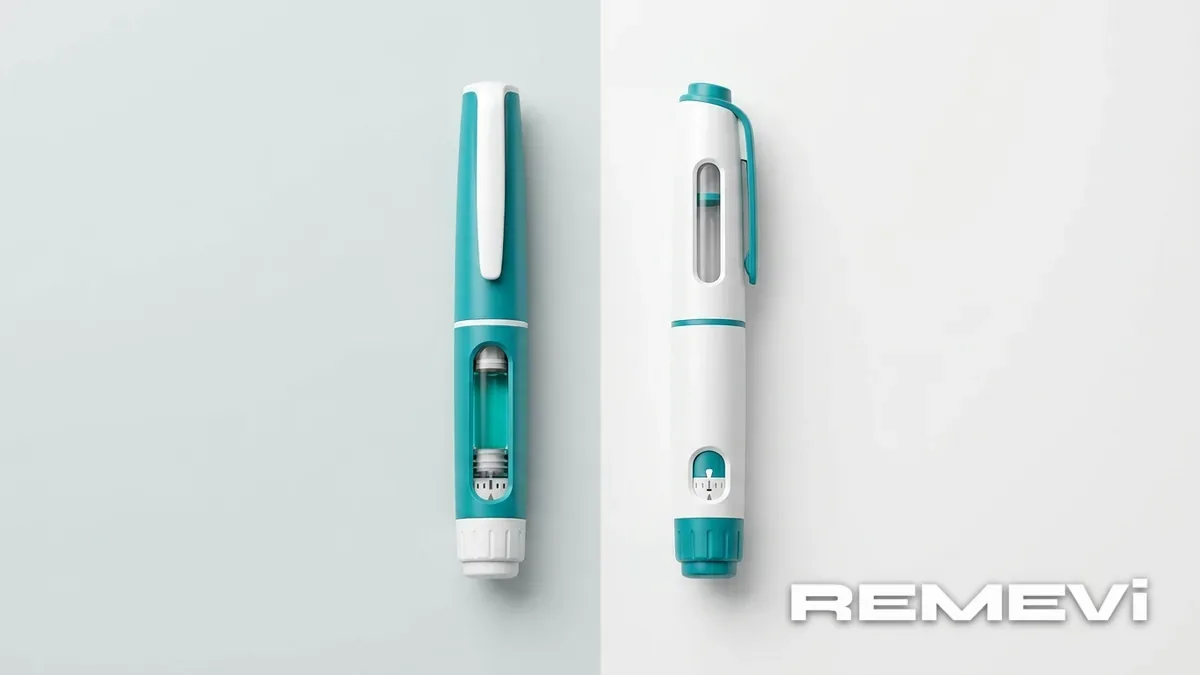
 This is semaglutide, the active ingredient in Ozempic. As a GLP-1 receptor agonist, it mimics a gut hormone that helps regulate appetite, fullness, and blood sugar; it also slows how quickly the stomach empties.
Here is a point that is often confused and worth getting straight. The FDA approved Ozempic as an adjunct to diet and exercise to improve blood sugar control in adults with type 2 diabetes, and also to reduce certain cardiovascular and kidney risks in that population. The version of semaglutide approved specifically for chronic weight management is called Wegovy: its label indicates it, alongside diet and physical activity, for adults with a body mass index of 30 or higher, or 27 or higher with at least one weight-related condition. Wegovy uses the same active ingredient but on a different dosing schedule that steps up to 2.4 mg per week. So when someone compares “Contrave vs Ozempic” for weight loss, they are really comparing two classes: a combination pill and a GLP-1 injection.
Placed side by side, here is how the differences the labels describe look, without claiming either is superior:
| Contrave | Ozempic (semaglutide) |
|---|
| Class | Combination: naltrexone + bupropion | GLP-1 receptor agonist |
| Format | Oral extended-release tablet | Subcutaneous injection |
| Frequency | Twice a day | Once a week |
| Where it acts | Appetite and reward in the brain | GLP-1 receptors (satiety, blood sugar) |
| FDA indication | Weight management (obesity, or overweight with a comorbidity) | Type 2 diabetes (semaglutide for weight is Wegovy) |
The side-effect profiles also differ. With GLP-1 medications, the label describes digestive effects such as nausea, and notes that the medication slows gastric emptying. With Contrave, the label puts the focus elsewhere, including the seizure warning tied to bupropion and effects on blood pressure. No table can say which is better for a particular person; it can only describe how they differ. If you want the logic of one class versus another, our guide to pills vs injections develops it, as does the comparison of semaglutide vs tirzepatide within the GLP-1 class.
Which is “better” for you? A clinician decides
The honest answer is that there is no single best for everyone. The right medication depends on your medical history, the indication that matches your situation, your other conditions, which effects you tolerate, and what you can access. Someone with a history of seizures and someone who would rather avoid injections will reach different decisions, and both can be right for that person. That is why the label comparison is only the start; the decision happens in a consultation, not in a table.
This is where having a clinician who actually stays with you matters. That is the point of physician-led care: a licensed clinician reviews your medications, weighs the labeled considerations against your health picture, and stays available as things change, with transparent pricing and care coaching between visits so the practical questions never pile up. You can look at your prescription weight loss options and, when you are ready, talk it through with a clinician who reviews your full case before recommending anything.
GLP-1 medications are FDA-approved for specific indications, and eligibility is determined by a licensed clinician. Compounded semaglutide is a non-FDA-approved preparation. It is not a generic and is not the same as Ozempic® or Wegovy®.
Real doctors. Real care. remevihealth.com
Your Health. Your Terms.