Berberine is a supplement; Ozempic is an FDA-approved semaglutide product for type 2 diabetes and certain related risks. Berberine should not replace prescribed diabetes treatment.
Over the last couple of years, berberine went viral on social media, especially on TikTok, under the nickname “nature’s Ozempic.” It is a catchy nickname, but a misleading one. Before deciding anything, it is worth understanding what each one is, what the science says about how they act, and why putting them in the same sentence can lead to the wrong conclusions. None of this is medical advice, and individual results vary.
Recommendations and results for approved medicines depend on the indication and product. NIDDK describes weight-management medication as part of a plan that also includes nutrition, activity and follow-up. Source: NIDDK: prescription weight-management medicines
Is berberine “nature’s Ozempic”?
The nickname sounds logical, but it blends two things that belong to different categories. Calling berberine “nature’s Ozempic” suggests it does the same thing as the medication, only in a “natural” way. The reality is that they do not share a category, a regulatory path, an evidence base, or a mechanism.
It helps to treat that nickname as a claim to examine, not as a fact. Popularity online does not prove clinical equivalence. The NCCIH (the complementary health center at the US National Institutes of Health) notes that berberine gained attention on the internet for its purported ability to induce weight loss, while also cautioning that the evidence does not yet support that reputation. A supplement sold without a prescription and a prescription GLP-1 medication are not interchangeable simply because a trend paired them together. NCCIH: berberine and weight loss
What each one actually is
Let’s start with the basics, because half the confusion lives there.
Berberine is an alkaloid found in several plants: European barberry, goldenseal, goldthread, Oregon grape, and tree turmeric, among others. These plants have been used medicinally for thousands of years in Ayurvedic medicine and traditional Chinese medicine. Today berberine is sold as an over-the-counter dietary supplement and is promoted for diabetes, high cholesterol, high blood pressure, and, most recently, as a weight-loss aid. The key point: it is a supplement, not an approved drug, and it is not regulated as a medication.
Semaglutide, sold under the brand name Ozempic, is a different thing entirely. It is a prescription medication in the GLP-1 receptor agonist class, and Ozempic carries an FDA-approved indication for type 2 diabetes. It is given as a once-weekly subcutaneous injection. Unlike a supplement, a prescription medication goes through a regulatory review of safety and efficacy before it reaches the market, and its use is determined by a licensed clinician.
Put simply: one is a plant sold in a supplement bottle; the other is a prescription drug. That difference in category changes everything. If you want to see where prescription weight-loss medications fit relative to over-the-counter options, that is a good place to start.
The science: different mechanisms
This is where the “nature’s Ozempic” nickname falls apart completely, because the two substances act on different systems in the body.
Berberine mainly influences metabolic pathways. Research associates it with activation of AMPK (a kind of cellular energy switch) and with effects on other routes such as p38 MAPK, JNK, and PPAR-alpha. The result, according to the studies, is modest effects on glucose and lipids: in general, its role in blood sugar and cholesterol has been studied more than its role in weight. It is an indirect, metabolically acting mechanism.
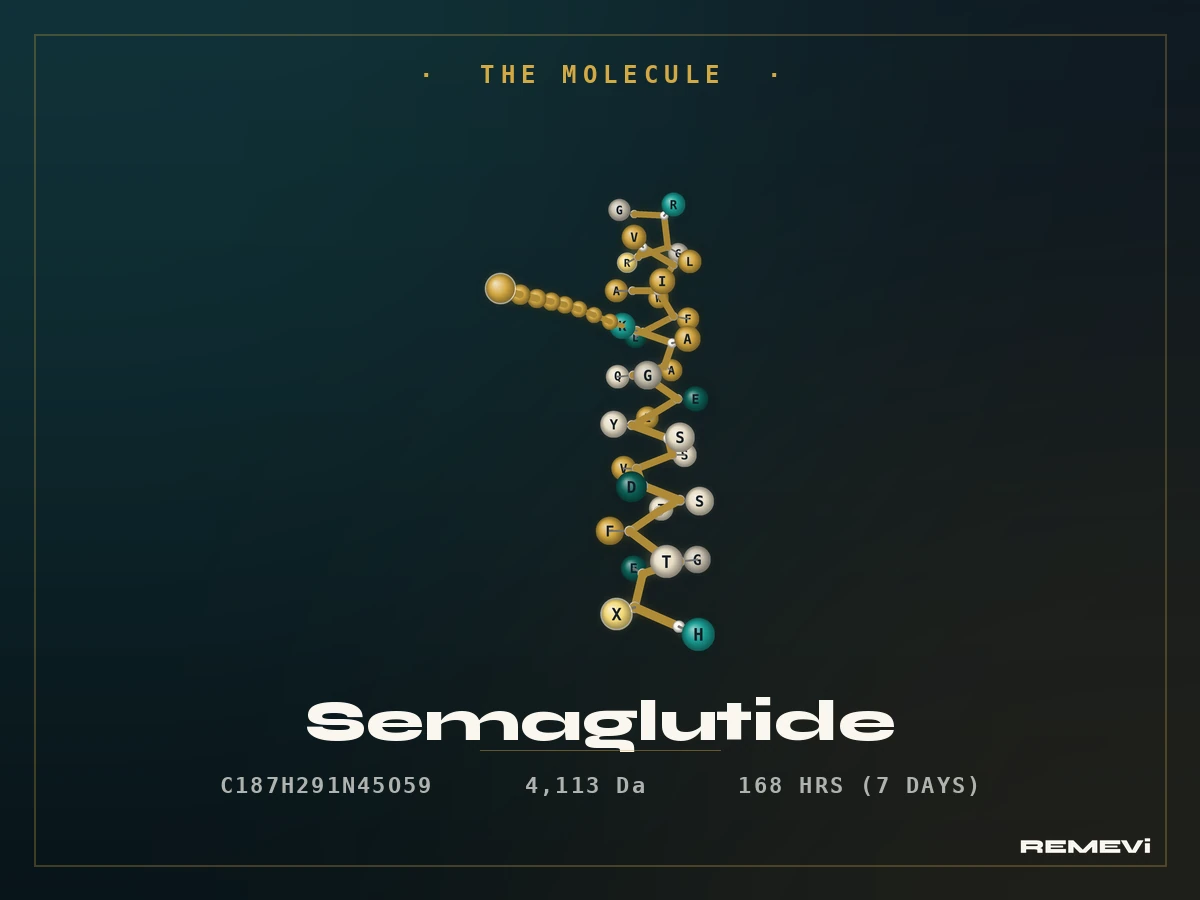 This is semaglutide, a GLP-1 receptor agonist: it binds to and activates the GLP-1 receptor, the same target as the natural hormone your gut releases after eating. Berberine, by contrast, is a plant alkaloid that acts on metabolic pathways such as AMPK. Not the same target, and not the same path.
Semaglutide does something different. It is a GLP-1 receptor agonist: it binds to the GLP-1 receptor (the same target as the GLP-1 hormone your own body makes) and activates it. That influences appetite, the sense of fullness, and gut-to-brain signaling. According to FDA prescribing information, semaglutide has a half-life of about one week, which is why it is injected only once a week. It is a direct action on a specific hormonal pathway. Wegovy: prescribing information
Two substances, two mechanisms, two categories. It is not that one is “the natural version” of the other; they simply do not travel the same road. If you are curious how GLP-1 medications compare to one another, we go deeper in our guide to semaglutide vs tirzepatide.
What about glucose or cholesterol?
It is worth separating two questions that the trend tends to merge. One is berberine’s recent fame for weight loss; another is where it has actually been studied more: glucose and lipids. There the evidence is somewhat stronger, though it still has important limits.
The NCCIH summarizes a 2021 review that pooled 46 studies with more than 4,000 participants: berberine may have beneficial effects on lowering blood glucose, reducing insulin resistance, and improving lipid metabolism in people with type 2 diabetes, and it may modestly reduce cholesterol. But the same summary spells out the fine print: most of those studies are small and differ from one another in participant characteristics, supplement formulations, dosing, and length, which prevents clear conclusions. “Modest” and “may” are the right words, not “proven.” NCCIH: berberine and weight loss
This matters for two reasons. First, lowering glucose or cholesterol does not make something an approved weight treatment. Second, if you live with diabetes or take medication for blood sugar or blood pressure, adding berberine on your own can interact with what you already take. If your interest is the glucose-and-weight side with regulated options, our guide to FDA-approved weight-loss pills explains what exists by prescription and what does not.
Regulation, quality, and safety
Another big and often-overlooked difference is how each one is controlled.
Dietary supplements are not reviewed the way prescription medications are before they are sold. That has practical consequences: the dose and purity of berberine can vary from brand to brand, and you do not always know exactly what a bottle contains. On safety, the NCCIH notes that oral berberine is generally well tolerated but can cause abdominal pain, constipation, diarrhea, nausea, and vomiting. It can also interact with other medications, and people who are pregnant or breastfeeding should not use it; it should not be given to infants, either, because it can cause or worsen jaundice in newborns. NCCIH: berberine and weight loss
On the weight-loss evidence, the NCCIH’s message is cautious: some preliminary studies suggested berberine might play a role in weight loss, but there have not been many clinical trials, and there is not enough rigorous scientific evidence to determine whether it is effective. Even for glucose and lipids, where the evidence is stronger, many studies are small and inconsistent, which limits firm conclusions. None of this supports promises of results. NCCIH: berberine and weight loss
The reasonable takeaway is not “berberine does nothing.” It is that berberine is a different category, with less oversight and less evidence, and that combining it with other medications without supervision is not a good idea. Talk to your clinician before adding any supplement to your routine.
Which is right for you?
Here it helps to reframe the question. This is not a “better” or “worse” verdict, because these are not two versions of the same thing competing in the same league. An over-the-counter supplement and a prescription GLP-1 medication answer different situations, and a supplement does not replace a medical evaluation.
GLP-1 medications are FDA-approved for specific indications, and eligibility is determined by a licensed clinician. That is exactly the part no social-media nickname can settle for you: what is appropriate for your case depends on your history, your other conditions, and your goals. Berberine, for its part, is not a REMEVi product; we mention it here only to make the comparison clear, not to recommend it.
At REMEVi, a physician-led team and steady care coaching walk with you from start to finish, with transparent pricing and no guesswork, so you understand every option before you decide. If you want to move from wondering to a clear answer, you can see how it works and talk with a clinician who reviews your case. Real doctors. Real care. remevihealth.com
Your Health. Your Terms.