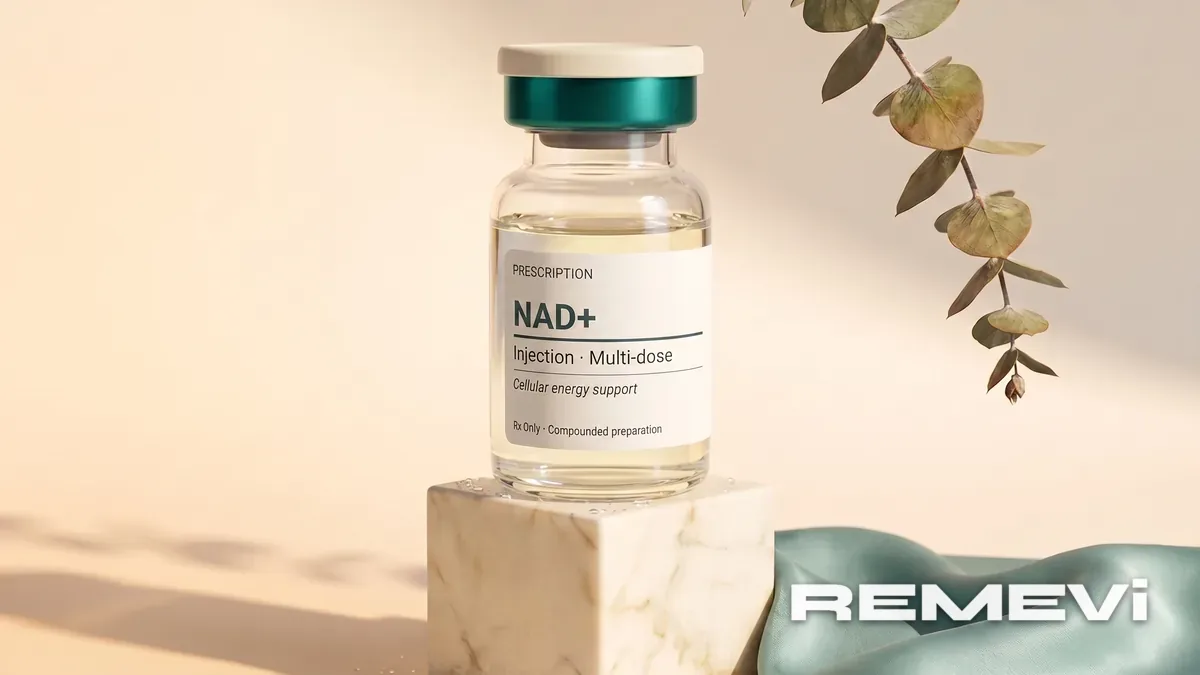
NMN and NR are precursors the body can convert into NAD+, the coenzyme cells use in energy metabolism. NMN and NR are sold as over-the-counter supplements; NAD+ injections are compounded and require a prescription. Some precursors raise NAD-related blood measures, but no study has shown any of them improves how people feel or age.
A pilot study of intravenous NAD+ measured metabolites in eight treated participants and three controls; it did not establish clinical benefits or a subcutaneous dosing schedule. Source: NAD+ intravenous pilot study
NMN vs NR vs NAD+ at a glance
| NMN | NR | NAD+ |
|---|
| What it is | Nicotinamide mononucleotide, a precursor | Nicotinamide riboside, a form of vitamin B3 and a precursor | Nicotinamide adenine dinucleotide, the coenzyme cells use |
| Role | Converted by the body toward NAD+ | Converted by the body toward NAD+ | Carries electrons in energy metabolism; used by repair enzymes |
| How it’s sold | Over-the-counter supplement | Over-the-counter supplement | Compounded, by prescription (injection, nasal spray or oral dropper) |
| Human evidence | Can raise NAD-related blood measures; no shown health outcome | Can raise NAD-related blood measures; no shown health outcome | Human research mostly on IV infusions; no trial of at-home use |
| Oversight | Dietary-supplement rules | Dietary-supplement rules | Licensed prescriber and pharmacy; not FDA-approved |
What is the difference between NMN and NAD+?
- NAD+ (nicotinamide adenine dinucleotide) is the coenzyme your cells actually use, central to turning nutrients into energy. (Full explainer: what NAD+ is.)
- NMN (nicotinamide mononucleotide) is a precursor — a building block the body can convert toward NAD+.
- NR (nicotinamide riboside) is another precursor, similar in concept to NMN.
A useful mental model: NAD+ is the destination; NMN and NR are roads that may lead toward it.
Is it better to take NAD+ or NMN?
Supplement marketing loves to crown a winner. The honest answer is that no study has shown one form is better for how people feel or age. Human studies show some oral precursors can raise NAD-related measures in the blood, and results vary by product and study, but a laboratory change is not the same as a health benefit.
What is well established is NAD+‘s role as a coenzyme in cellular energy metabolism. How the options compare in people is less settled — which is why individual guidance from a licensed provider beats a ranking.
What is the difference between NAD+ and NR?
NR is a form of vitamin B3 that the body can use to build NAD+, much like NMN. It is sold over the counter. Prescribed NAD+ is the finished coenzyme, compounded for one patient by a licensed pharmacy — with provider oversight and, importantly, also not FDA-approved as a finished product. Source: FDA: risks of compounded medicines
Neither is a magic bullet, and which — if either — makes sense for you is a clinical conversation. For the prescription side, see NAD+ injections, the needle-free NAD+ nasal spray, and current plan prices on the NAD+ injection cost page.
Can you take NMN and NAD+ together?
Taking NMN or NR alongside prescribed NAD+ has not been studied for safety or benefit. Tell your provider about every supplement you take before starting NAD+. Injectable NAD+ also carries its own considerations, such as sterile preparation and ingredient quality, covered in are NAD+ injections safe?.
Want a provider’s grounded take? REMEVi prescribes NAD+ online — injection, nasal spray or oral dropper — after a licensed US provider reviews your case, with bilingual care.
Related reading: NAD+ supplements vs injections and NAD+ benefits.
This article is for general education and is not medical advice. NAD+ prescribed by REMEVi is a non-FDA-approved compounded medication available by prescription from a licensed provider after an individual evaluation.
Injectable preparation safety
FDA has received reports of severe chills, shaking, vomiting and fatigue after NAD+ injectable medicines, with some patients requiring medical care. It warns that food-grade ingredients are unsuitable for sterile compounding. Those reports do not establish a risk frequency for a particular preparation. Source: FDA: ingredients for sterile compounding